
Have you ever seen a bright pink dragon fruit, a hairy rambutan or a deep-purple mangosteen and wondered, “What does this actually taste like?”
You're not alone.
India has a wonderful variety of familiar fruits, from mangoes and guavas to pomegranates and bananas. But there is another world of interesting flavours waiting to be explored.
Some fruits have creamy, buttery flesh. Others taste sweet and floral, almost like lychees. A few look so unusual that you'd never guess how delicious they can be.
The best part? You don't need to travel overseas to discover them.
From dragon fruit and golden kiwi to rambutan and mangosteen, a growing selection of premium and exotic fruits can now be found in India.
Here are 10 exotic and premium fruits worth trying, what to expect from their flavours, and how to enjoy them at home.
1. Dragon Fruit — The Fruit That Looks Like It Came From Another Planet
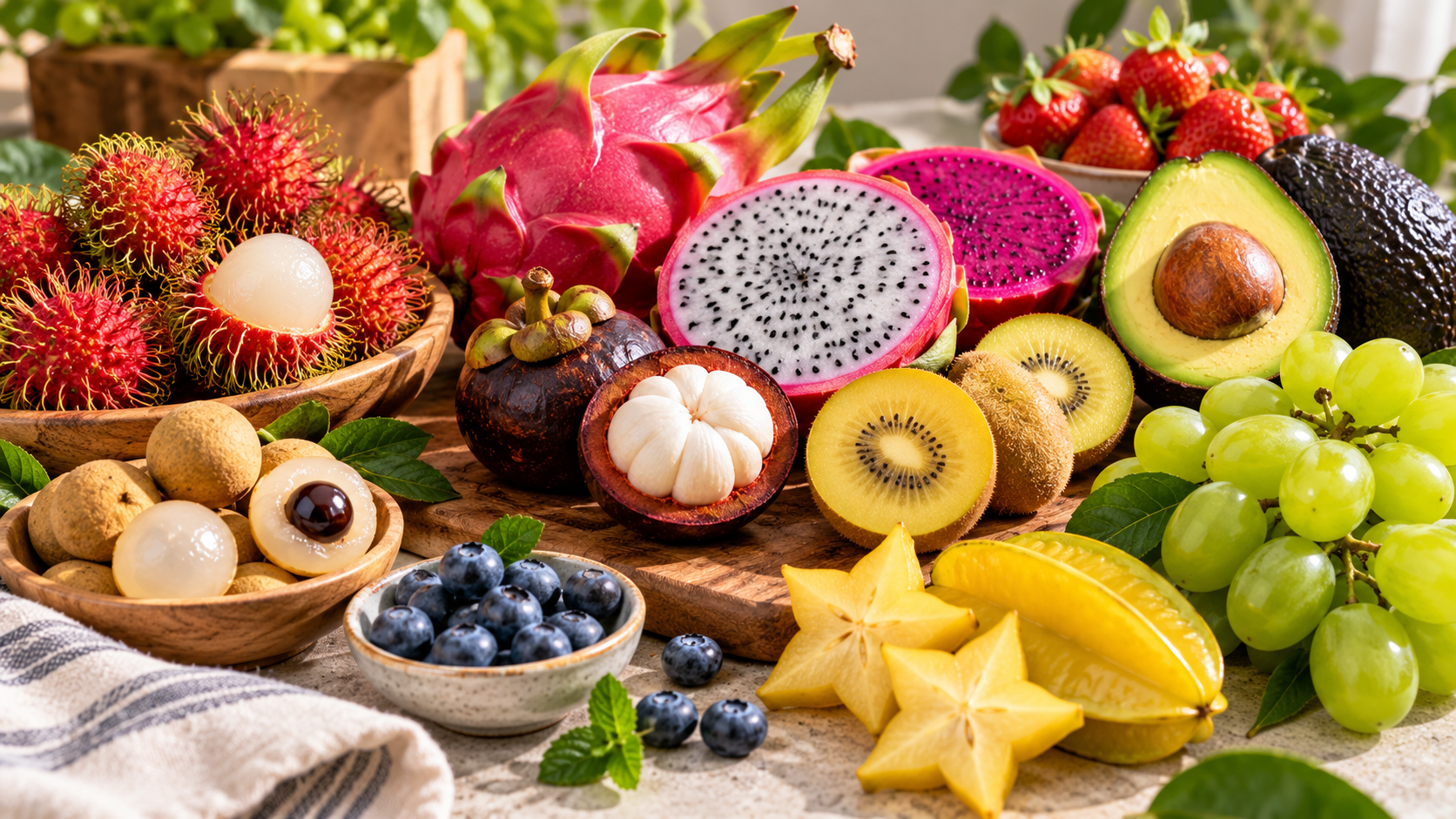
Dragon fruit is easily one of the most recognisable exotic fruits.
Its bright pink or reddish skin, green-tipped scales and beautiful flesh make it a favourite for colourful food photography.
Cut one open and you'll discover white or red-purple flesh dotted with tiny black seeds.
What does dragon fruit taste like?
Dragon fruit usually has a mild, refreshing sweetness. People often compare its taste to a combination of pear and kiwi.
Some varieties are noticeably sweeter than others. Flesh colour alone doesn't guarantee sweetness.
How to eat dragon fruit
-
Wash the fruit and cut it in half.
-
Scoop out the flesh with a spoon or peel away the skin.
-
Cut the flesh into cubes.
-
Enjoy it fresh or add it to a fruit bowl.
The tiny black seeds are edible. The outer skin isn't normally eaten.
Try this: Combine chilled dragon fruit cubes with kiwi and a squeeze of lime for a colourful, refreshing snack.
Explore: Premium fruits at Tokriii, including red and white dragon fruit when available.
2. Rambutan — The Hairy Fruit with a Sweet Surprise
At first glance, rambutan looks like a tiny red sea creature.
Its skin is covered in soft, flexible, hair-like projections, making it one of the most unusual-looking fruits on this list.
But underneath that remarkable exterior is a sweet surprise.
What does rambutan taste like?
If you enjoy lychees, there's a good chance you'll like rambutan.
The edible white flesh is juicy, sweet and delicately fragrant, with a pleasant springy texture.
How to eat rambutan
Wash the fruit, then make a shallow cut through its outer skin.
Gently separate the rind to reveal the translucent white flesh.
Remove and discard the large central seed. The peel and seed should not be eaten.
Try this: Serve freshly peeled rambutan chilled alongside sliced mango for a simple tropical dessert.
Fun fact: The name rambutan comes from the Malay word rambut, meaning hair.
Tokriii's catalogue has included rambutan under the product name Ram Bootan.
3. Mangosteen — The Purple Fruit Hiding a Delicate Dessert
Mangosteen has a thick purple rind that doesn't immediately reveal what's inside.
Open it carefully, and you'll find soft white segments arranged almost like tiny cloves of garlic.
The appearance is unusual. The flavour is the reward.
What does mangosteen taste like?
Mangosteen has a pleasantly sweet flavour balanced by gentle acidity.
Its delicate taste is sometimes compared to peach, citrus and pineapple.
The soft, juicy white segments are the edible part.
How to eat mangosteen
Wash the outside and carefully score the thick rind without cutting deeply into the flesh.
Gently open the fruit and remove the white segments.
Some larger segments may contain seeds, so eat carefully.
Discard the thick rind.
Try this: Mangosteen is best appreciated simply chilled and eaten fresh. Its delicate flavour doesn't need much dressing up.
If you've never tasted mangosteen, this is an excellent fruit for a weekend tasting platter.
4. Longan — The Little Fruit That Resembles Lychee
Longan may not look especially exciting at first.
Its small, round, light-brown shell resembles a tiny potato more than a fruit.
But peel it, and you'll discover translucent flesh surrounding a shiny dark seed.
What does longan taste like?
Longan is sweet, juicy and subtly floral.
It's related to lychee and rambutan, but its flavour has a character of its own.
Some people notice a gentle musky or earthy note alongside the sweetness.
How to eat longan
Crack or peel away the thin brown shell.
Eat the translucent white flesh, taking care to remove the hard central seed.
Don't eat the seed or peel.
Try this: Add peeled, deseeded longan to a chilled bowl of seasonal fruits.
Fun fact: Longan is sometimes called dragon's eye because the translucent flesh surrounding its dark seed resembles an eye.
5. Golden Kiwi — A Sweeter Twist on a Familiar Favourite
You might already know green kiwi, with its bright green flesh, tiny black seeds and pleasantly tart taste.
Golden kiwi offers a different experience.
Slice it open and you'll find smooth golden-yellow flesh.
What does golden kiwi taste like?
Golden kiwi is often sweeter and less tart than traditional green kiwi, although flavour varies with variety and ripeness.
It's refreshing, soft and aromatic.
How to eat golden kiwi
Wash the fruit, slice it in half and scoop out the flesh with a spoon.
You can also peel it and cut it into thin slices.
Both golden and green kiwi look beautiful in yoghurt bowls.
Try this: Layer golden kiwi slices over thick plain yoghurt and add a few fresh blueberries.
Explore: Tokriii has listed both Zespri Green Kiwi and Zespri Gold Kiwi in its premium selection.
6. Avocado — The Creamy Fruit That Doesn't Need to Taste Sweet
Not every fruit is sweet.
Avocado is technically a fruit, yet its flavour is mild, savoury and buttery.
This makes it very different from juicy fruits like mangoes, grapes or watermelon.
What does avocado taste like?
A ripe avocado has a rich, creamy texture and a subtle flavour.
It works particularly well with lime, black pepper, salt, tomatoes and fresh herbs.
How to eat avocado
Choose an avocado that yields slightly to gentle pressure without feeling mushy.
Wash the outside, carefully cut it lengthwise around the pit, separate the halves and remove the pit safely.
Scoop out the flesh with a spoon.
Easy Indian-Style Avocado Toast
Mash half a ripe avocado with a squeeze of lime.
Spread it over toasted bread.
Add chopped tomato, black pepper and a little roasted cumin.
Finish with fresh coriander.
It's quick, satisfying and an easy way to try avocado for the first time.
Explore: Imported fruits at Tokriii, including avocado varieties when available.
7. Blueberries — Tiny Berries with a Big Personality
Blueberries are small, round and deep blue-purple.
They may look simple compared with dragon fruit or rambutan, but their flavour makes them a popular choice for breakfasts and desserts.
What do blueberries taste like?
Ripe blueberries can be sweet, mildly tart or a little of both.
Their flavour varies depending on variety and ripeness.
The texture is tender, with a thin skin and juicy interior.
How to eat blueberries
Rinse gently under running water shortly before eating.
Enjoy them whole, mix them with plain yoghurt, or use them as a topping for oats.
Try this: Combine blueberries, golden kiwi and a few pomegranate arils for a colourful breakfast bowl.
Fresh blueberries are also an easy introduction to premium fruit for someone who prefers familiar flavours.
8. Shine Muscat Grapes — Not Your Ordinary Green Grapes
At first glance, Shine Muscat grapes may look like regular green grapes.
But their crisp texture and distinctive aroma make them something different.
Shine Muscat is a premium grape variety developed in Japan.
What do Shine Muscat grapes taste like?
They are known for their pronounced sweetness, relatively low acidity and characteristic muscat fragrance.
The berries are often large, juicy and satisfyingly crisp.
Their skin is generally thin enough to eat. Many commercially produced bunches are seedless, although characteristics can vary.
How to eat Shine Muscat grapes
Rinse thoroughly under running water.
Serve chilled and enjoy them as they are.
They also make an attractive addition to a fresh fruit platter.
Try this: Pair Shine Muscat grapes with strawberries and kiwi for a colourful sharing bowl.
You don't need an elaborate recipe when the fruit itself is the main attraction.
9. Star Fruit — The Fruit That Turns into Stars
Few fruits have a more playful shape than star fruit.
Also called carambola, its five ridges create beautiful star-shaped pieces when sliced crosswise.
It can make an ordinary plate of fruit look special.
What does star fruit taste like?
Its flavour ranges from tart to gently sweet, depending on variety and ripeness.
The flesh is juicy and pleasantly crisp.
How to eat star fruit
Wash the fruit thoroughly.
Trim any damaged edges, remove seeds if present, and slice crosswise into stars.
The thin skin is generally edible.
Important safety note: People with kidney disease should not eat star fruit. It contains substances that can cause serious toxicity in people whose kidneys cannot process them properly. The National Kidney Foundation specifically advises avoidance.
For people who can safely eat it, star fruit is an unusual fruit worth learning about.
10. Thai Pink Guava — A Familiar Fruit with a Premium Twist
Guava is already loved across India.
But exploring different guava varieties reveals how much texture, sweetness and fragrance can change from one type to another.
Thai guavas are often appreciated for their firm, crunchy flesh.
What does Thai guava taste like?
Depending on the variety and ripeness, the flavour may be mildly sweet with a pleasant guava aroma.
Some varieties remain relatively crisp even when ready to eat.
Not all Thai guavas have pink flesh, so check the specific variety rather than assuming the colour.
How to eat Thai guava
Wash the outside, slice into wedges and enjoy fresh.
The edible skin can be left on if preferred.
Try this: Add a small pinch of roasted cumin, a little chaat masala and a squeeze of lime.
A simple fruit snack suddenly becomes something special.
Which Exotic Fruit Should You Try First?
Not sure where to begin?
Choose according to the flavours you already love.
| If you enjoy... | Try... |
|---|---|
| Lychee | Rambutan or longan |
| Sweet green grapes | Shine Muscat |
| Refreshing, mildly sweet fruit | Dragon fruit |
| Sweet-and-tart flavours | Golden kiwi |
| Soft, delicate tropical fruit | Mangosteen |
| Creamy savoury foods | Avocado |
| Crunchy guava | Thai guava |
| Small sweet-tart berries | Blueberries |
You don't need to purchase every exotic fruit at once.
Start with two or three different types. Compare their taste and texture and discover which ones you genuinely enjoy.
Make Your Own Exotic Fruit Tasting Platter
Here's a fun idea for a weekend with family or friends.
Instead of serving the usual fruit bowl, create a small tasting experience.
What you'll need
-
1 dragon fruit
-
2 golden kiwis
-
A small handful of blueberries
-
A few peeled, deseeded rambutans
-
A handful of Shine Muscat grapes
-
Fresh mint leaves
How to prepare it
-
Wash all the fruits appropriately before preparation.
-
Cut the dragon fruit into bite-sized cubes.
-
Peel and slice the golden kiwis.
-
Prepare the rambutans, removing the shells and seeds.
-
Arrange the fruits in small sections on a clean serving plate.
-
Garnish with fresh mint and serve immediately.
No added sugar is needed.
Keep prepared fruit refrigerated until serving.
Make it interactive: Ask everyone to pick the fruit they think will taste the sweetest before taking the first bite.
It's a simple way to introduce unusual flavours without making the experience complicated.
Are Exotic Fruits Healthier Than Regular Indian Fruits?
This is one of the most important questions to ask.
Exotic doesn't automatically mean healthier.
Fruits vary in their natural composition. Some provide vitamin C, some contribute fibre, and others offer different vitamins, minerals and naturally occurring plant compounds.
But familiar fruits like guava, papaya, oranges, bananas and amla can also be valuable parts of a balanced diet.
There is no need to replace affordable local fruits with expensive imported varieties.
A sensible approach is to enjoy a variety of fruits based on your preferences, budget, availability and dietary needs.
Think of exotic fruits as an opportunity to discover different flavours, not as miracle foods.
Be cautious of social-media claims suggesting that a particular fruit can cure diseases, detoxify your body or guarantee dramatic health results.
5 Things to Check Before Buying Premium or Exotic Fruits Online
Trying a new fruit should be enjoyable, not confusing.
Before ordering, consider these points.
1. Check the product name and variety. Green kiwi and golden kiwi are different eating experiences. So are red-fleshed and white-fleshed dragon fruits.
2. Look at the listed weight or pack size. Some premium fruits are sold individually, while others come in small packs or tubes.
3. Consider ripeness. An avocado intended for immediate use should have a different level of ripeness from one you plan to eat several days later.
4. Check seasonal availability. Exotic and imported fruit selections can change with supply and season.
5. Check delivery availability for your location. Ensure the website serves your delivery address and review the available checkout options.
These habits make it easier to choose fruits you'll actually enjoy.
Frequently Asked Questions About Exotic Fruits in India
What are the best exotic fruits to try in India?
Popular options include dragon fruit, rambutan, mangosteen, longan, kiwi, avocado and blueberries. The best choice depends on whether you prefer sweet, tangy, creamy or refreshing flavours.
Which exotic fruit tastes like lychee?
Rambutan and longan are both related to lychee. Each has sweet, translucent flesh surrounding a central seed, although the flavours and textures are not identical.
What is the difference between red and white dragon fruit?
The most obvious difference is the flesh colour. Red-fleshed dragon fruit contains pigments responsible for its vibrant appearance. Taste and sweetness vary by variety and growing conditions, so one colour is not always sweeter than the other.
Is golden kiwi sweeter than green kiwi?
Golden kiwi is often sweeter and less tart than green kiwi, although actual flavour depends on ripeness and variety.
Can you eat the seeds of exotic fruits?
It depends on the fruit. Dragon fruit and kiwi have small edible seeds. Rambutan, longan and certain mangosteen segments have larger seeds that should be removed and discarded.
Are all exotic fruits imported into India?
No. Several exotic fruit crops are also cultivated within India. Their origin depends on the fruit, variety, grower and supply chain. A fruit being called exotic does not necessarily mean it was imported.
Where can I buy exotic fruits online?
Specialist fruit retailers and online fresh-produce stores may carry premium and exotic varieties. At Tokriii.com, you can explore available fruit categories, view pack sizes and check delivery availability for your address.
Discover Something Delicious with Tokriii
There's something memorable about tasting a fruit for the first time.
Maybe it's the first spoonful of mangosteen. The surprising sweetness beneath a rambutan's unusual skin. The creamy texture of a perfectly ripe avocado. Or the beautiful colour of freshly sliced dragon fruit.
Every fruit offers a slightly different experience.
At Tokriii, we bring together everyday favourites and a curated selection of premium, imported and exotic fruits.
Whether you're shopping for your family, preparing a special fruit platter or simply curious to try something new, you'll find different options to explore depending on availability.
Explore Exotic Fruits at Tokriii
Your next favourite fruit might be one you've never tasted before.
So, which would you try first: rambutan, mangosteen or dragon fruit?
Sources and Further Reading
Fruit tastes, textures, and availability vary by variety, origin, season and ripeness.