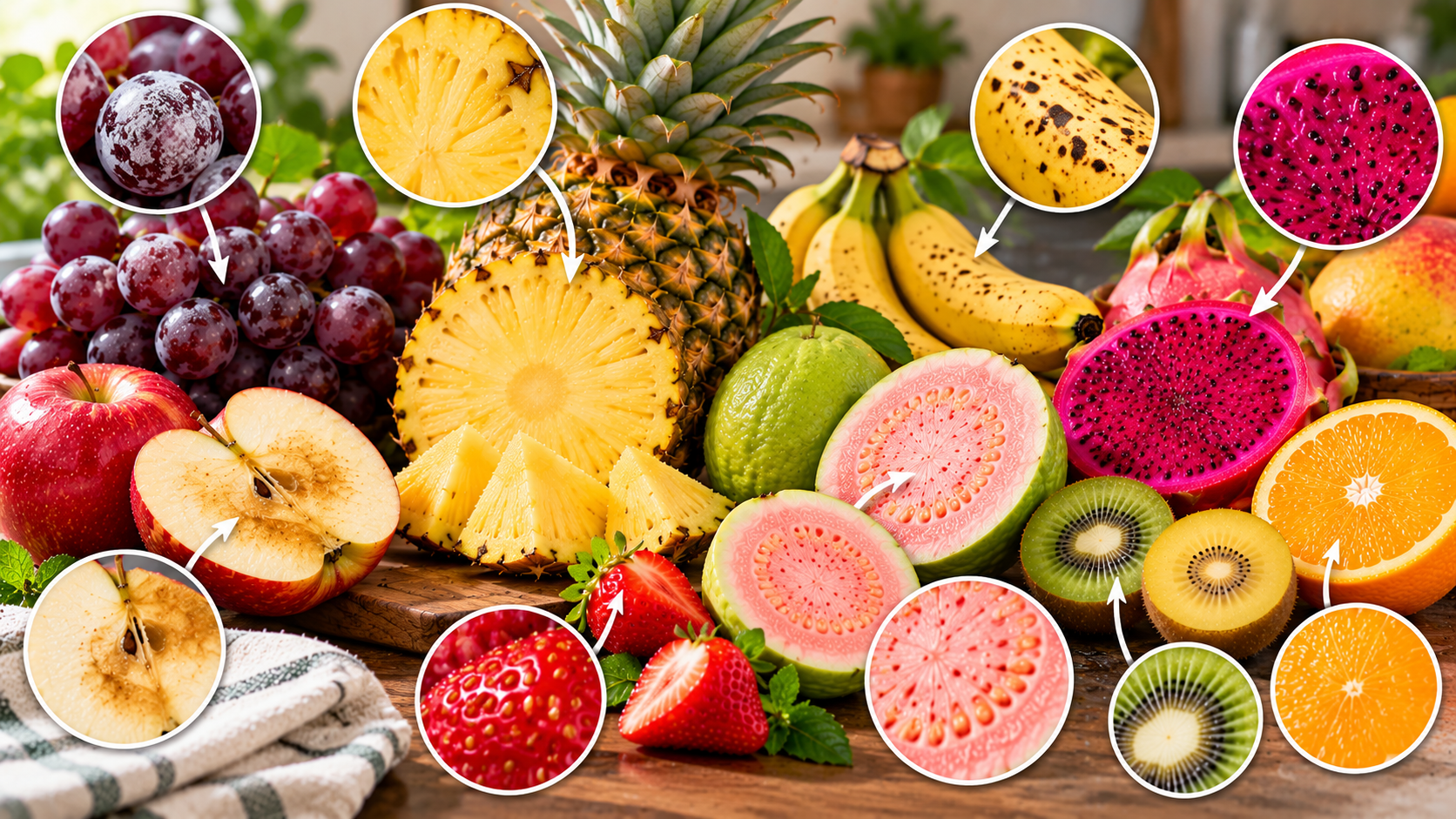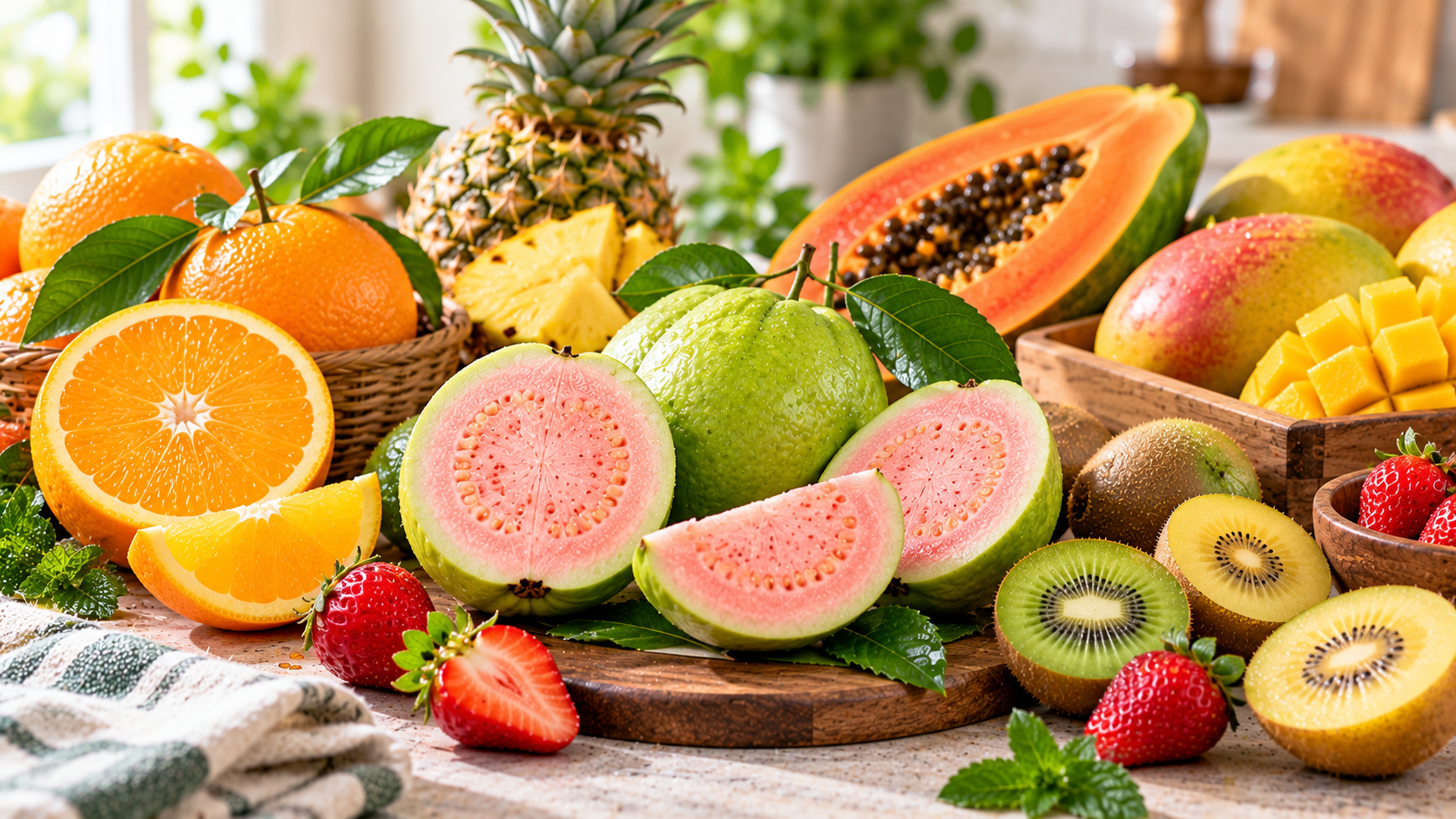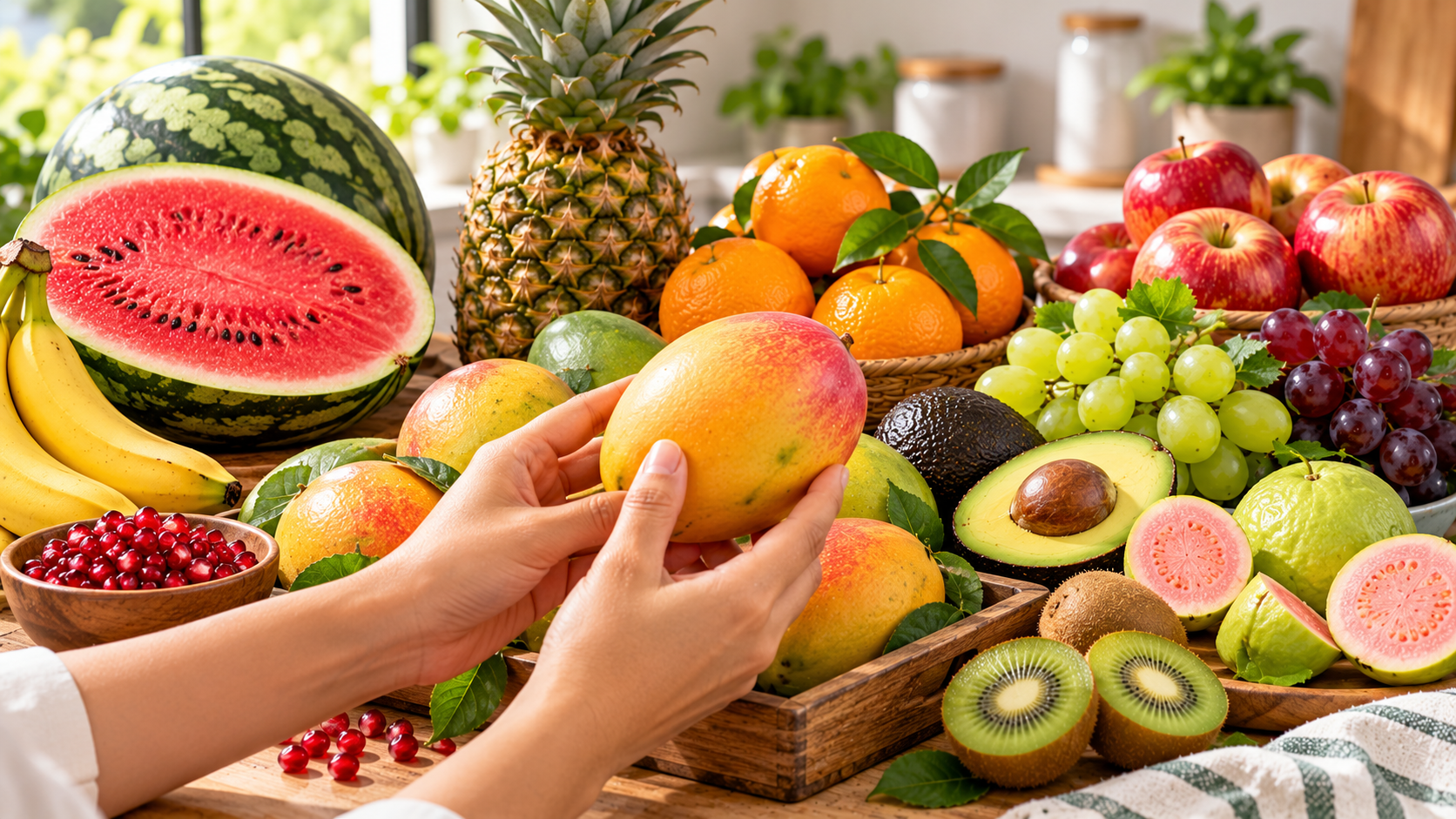

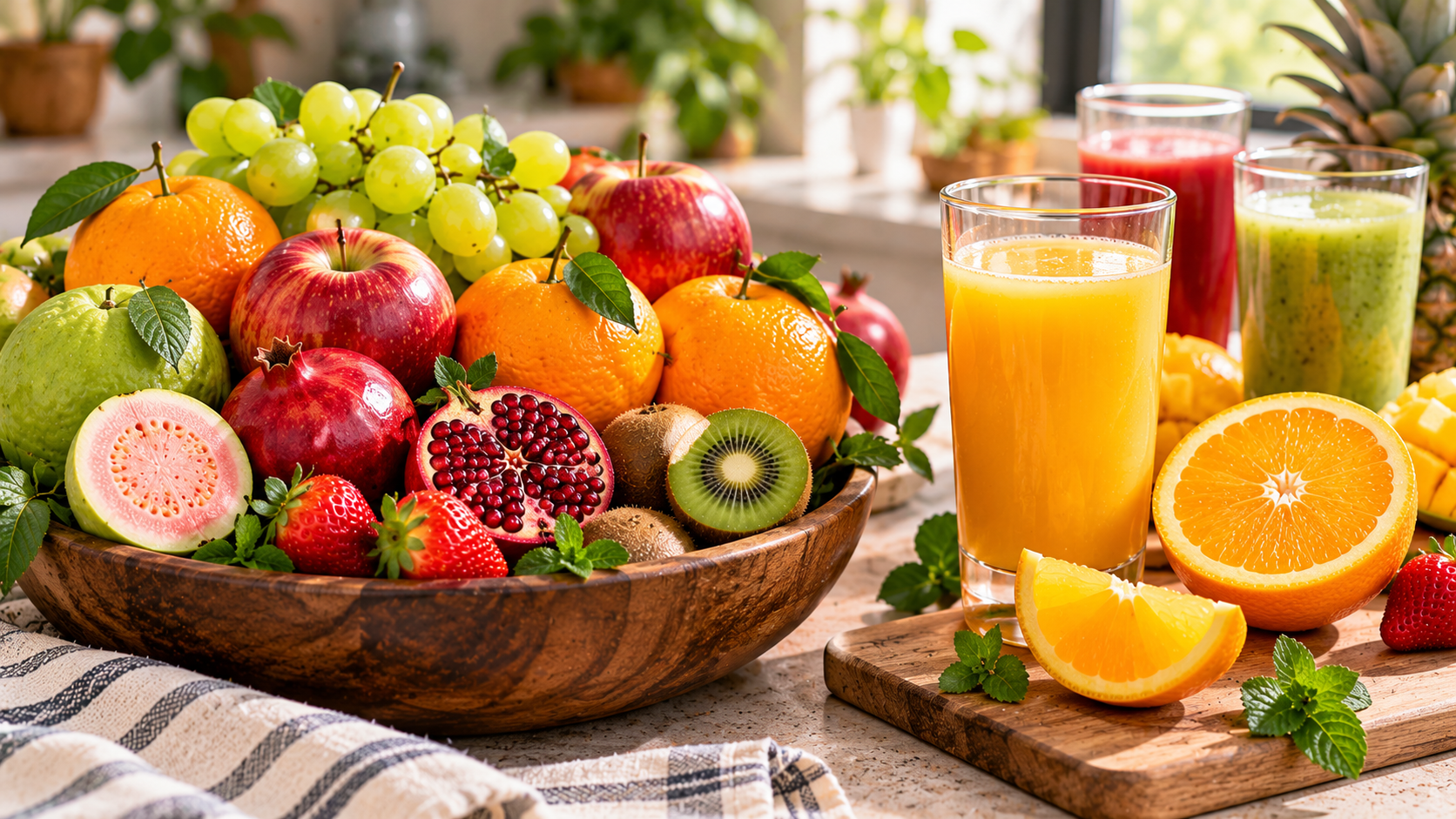
Imagine two breakfast options.
On one side, you have a fresh, juicy orange.
On the other, you have a tall glass of freshly squeezed orange juice.
Both come from oranges. Both taste delicious. Both provide vitamins.
So, which one is actually better for you?
Most people assume that freshly squeezed juice is just as nutritious as eating whole fruit. After all, it's natural, right?
But here's the surprising part: drinking fruit and eating fruit aren't always nutritionally equivalent.
The difference isn't simply about calories or sugar.
It's also about fibre, portion sizes, how satisfied you feel after eating and what happens when fruit is processed into juice.
And if you're choosing between freshly squeezed juice, packaged juice and a homemade smoothie, the answer becomes even more interesting.
Let's explore nine important facts about whole fruit versus fruit juice and how to make better everyday choices.
The Quick Answer: Is Whole Fruit Better Than Fruit Juice?
For most people, eating whole fruit is generally the better everyday choice.
Whole fruit usually provides more dietary fibre, requires chewing and makes it easier to enjoy a satisfying portion.
Fruit juice can still provide useful nutrients, including vitamins and minerals.
However, many juices contain much less fibre than the original fruit, and it's easy to drink the juice of several fruits in a short time.
That doesn't mean you must never drink fruit juice.
It means understanding the difference helps you choose when to eat, when to drink and how much to enjoy.
Whole Fruit vs Fresh Juice vs Smoothie: The Differences
Before exploring the facts, here's a simple comparison.
| Feature | Whole Fruit | Strained Juice | Whole-Fruit Smoothie |
|---|---|---|---|
| Dietary fibre | Usually retained | Much is removed | Largely retained if not strained |
| Natural fruit sugars | Present | Present | Present |
| Chewing required | Yes | No | No |
| Portion control | Often easier | Large servings are easy to drink | Depends on ingredients |
| Vitamins and minerals | Present | Many retained, amounts vary | Many retained, amounts vary |
| Added sugar | None in plain fruit | Depends on preparation | Depends on ingredients |
The exact nutrient content depends on the fruit, preparation method, added ingredients and serving size.
1. Whole Fruit Gives You Something Juice Often Doesn't: Fibre
Let's start with one of the biggest differences.
Dietary fibre.
When you eat an apple, guava, pear or orange, you're consuming parts of the fruit's natural structure, including fibre.
Fibre is important for digestive health and can contribute to feeling satisfied after eating.
When fruits are pressed or extracted into juice and the pulp is discarded, much of that fibre is lost.
For example, compare:
Eating an orange
You chew the juicy segments and consume the membranes and edible fibre.
Drinking strained orange juice
You enjoy the liquid, but much of the fibrous structure has been removed.
The juice can still contain vitamin C and other nutrients. It simply doesn't provide the same complete package as the whole orange.
The practical takeaway
If you're trying to add more fibre to your diet, choose whole fruit more often.
Fresh guava, apples, pears and oranges are convenient options to consider.
2. Natural Sugar Is Still Sugar, but the Food Matters
Here's where many social-media posts become misleading.
You may have heard someone claim:
"Fruit juice contains as much sugar as a soft drink!"
Or the opposite:
"Fruit juice is natural, so its sugar doesn't matter!"
Neither statement tells the complete story.
Whole fruits naturally contain sugars, including fructose, glucose and sucrose.
Fresh fruit juice also contains naturally occurring sugars.
But the food's structure and the amount consumed matter.
What does the WHO say?
The World Health Organization's definition of free sugars includes the sugars naturally present in fruit juices, as well as sugars added to foods and drinks.
This does not mean that a whole orange and a glass of orange juice should be treated identically.
The sugars in intact whole fruit are held within its cellular structure alongside fibre and water.
Juicing changes that structure.
Does no added sugar mean sugar-free?
No.
A drink can contain no added sugar and still contain naturally occurring sugars from fruit.
That's why it's useful to check both the ingredients list and the nutrition information on packaged beverages.
The practical takeaway
Don't fear eating whole fruit simply because it contains natural sugar.
Instead, pay attention to the type of food or drink and your usual portion size.
3. It's Easier to Drink Several Fruits Than Eat Them
Think about what happens when you sit down with three oranges.
You peel them, separate the segments and chew each bite.
Now imagine squeezing those oranges into a glass.
Depending on their size and juiciness, you might drink the resulting juice quite quickly.
The amount of fruit used can be greater than you'd normally choose to eat in one sitting.
This makes portion size an important consideration.
A large glass of juice may contain the sugars and energy from multiple fruits without the same fibre and chewing experience.
Why does this matter?
Because how much you consume is influenced by more than whether a food is natural.
The physical form of food can influence how satisfying it feels and how easy it is to consume a large serving.
The practical takeaway
If you enjoy juice, consider a small serving rather than automatically choosing the largest glass.
For everyday snacking, a whole fruit is often the more satisfying option.
4. Freshly Squeezed Juice Isn't Automatically Equal to Whole Fruit
Picture a familiar Indian breakfast.
A plate of poha, a bowl of fruit and a freshly squeezed glass of mosambi juice.
It sounds refreshing—and it can be.
Freshly squeezed juice may provide vitamin C and other nutrients depending on the fruit.
But "freshly squeezed" doesn't automatically mean that all the benefits of the original whole fruit remain.
For example, straining the juice removes some or much of its pulp.
That usually reduces the fibre content.
And while freshly prepared juice may contain useful vitamins, nutrient amounts also depend on processing, exposure to air and storage.
A better way to think about fresh juice
Fresh juice can be an enjoyable beverage.
Whole fruit remains a valuable food.
You don't have to treat them as identical.
The practical takeaway
If you love mosambi or orange juice, you can enjoy it occasionally while making whole fruit your regular choice.
Try this instead: Peel a sweet lime and enjoy its edible segments rather than always extracting the juice.
5. A Smoothie and a Juice Are Not the Same Thing
This is one of the most common misunderstandings.
People frequently use the words juice and smoothie interchangeably.
But the way they're prepared makes a difference.
What happens when you juice fruit?
A traditional juicer extracts liquid while separating much of the pulp.
Depending on the juicing method, the result may contain very little fibre.
What happens when you blend whole fruit?
A blender breaks the fruit into smaller pieces.
When the edible flesh and pulp are retained and the mixture isn't strained, much of the original fibre remains.
That makes a whole-fruit smoothie different from strained juice.
Does that make every smoothie healthy?
Not necessarily.
A very large smoothie may contain several portions of fruit, added sugar, sweetened yoghurt, syrups or other calorie-dense ingredients.
The final nutrition depends on everything in the blender.
Try this: Simple Banana & Berry Smoothie
Ingredients
-
1 small ripe banana
-
¼ cup blueberries
-
½ cup plain, unsweetened curd
-
A little water if required
-
Ice, optional
Method
-
Wash the blueberries before using.
-
Peel the banana and break it into pieces.
-
Add the fruit and curd to a blender.
-
Blend until smooth without straining.
-
Serve immediately.
There's no need to add sugar if the fruit already tastes sweet enough.
The practical takeaway
A homemade smoothie that retains the fruit's pulp can be a useful option, but whole fruit still offers the experience of chewing and often makes portions easier to manage.
6. Packaged Fruit Drinks Can Be Very Different from Fruit Juice
Walk into an Indian supermarket, and you'll find shelves full of brightly coloured fruit beverages.
Some are described as juices.
Others are nectars, fruit drinks or flavoured beverages.
They may look similar, but their ingredients can differ considerably.
What should you check?
Start with these four things.
The ingredients list: Look at the actual ingredients and whether sweeteners have been added.
The fruit content: Check what the packaging says about the fruit-derived portion of the beverage.
The nutrition table: Look at total sugars and added sugars where declared.
The serving size: Compare the quantity you plan to drink with the amount used on the nutrition label.
A useful Indian context
In June 2024, India's Food Safety and Standards Authority (FSSAI) issued a directive addressing misleading "100% fruit juice" claims used for certain reconstituted fruit juices.
The broader lesson is straightforward:
Don't rely only on the words printed prominently on the front of a package. Read the actual label.
The practical takeaway
A packaged fruit drink, an unsweetened fruit juice and a whole apple are not automatically equivalent choices.
The ingredient list tells you more than advertising language.
7. Whole Fruit Can Be More Satisfying Than Drinking Juice
Have you noticed that a glass of juice can disappear in a few seconds?
But eating an apple usually takes longer.
That's one reason food form matters.
Whole fruits require chewing and generally preserve their fibrous structure.
Together, these factors can influence how satisfied you feel.
Juice is consumed quickly, often without the same fullness.
Does fruit automatically cause weight loss?
No.
No individual fruit guarantees weight loss.
Your overall eating pattern, physical activity, health and portion sizes matter much more.
Still, replacing a sugar-sweetened beverage with an appropriate serving of whole fruit can be a useful everyday habit for many people.
The practical takeaway
When you're hungry between meals, try eating a whole fruit instead of relying only on juice.
A banana, apple, guava or pear can be convenient without requiring preparation.
8. Fruit Juice Isn't a Magical Detox Drink
You've probably seen advertisements promising:
"Drink this juice to detox your body!"
"One glass will cleanse your system!"
"Flush out all toxins with this fruit!"
These claims sound exciting, but they oversimplify how the human body works.
Your liver and kidneys already perform essential roles in processing and removing waste products.
Fruit juice doesn't replace those normal biological processes.
Fruits provide nutrients as part of a balanced diet, but they aren't miracle cures.
Are colourful fruits still worth eating?
Absolutely.
Different fruits can provide different vitamins, minerals, fibre and naturally occurring plant compounds.
For example:
-
Guava and kiwi can contribute vitamin C.
-
Bananas provide potassium.
-
Oranges contribute vitamin C and other nutrients.
-
Apples and pears contribute dietary fibre.
-
Papaya contributes vitamin C and carotenoids.
The exact amounts depend on variety, ripeness and portion size.
The practical takeaway
Enjoy a variety of fruits for nourishment and flavour—not because a viral video promises to detox your body.
9. The Best Choice Is One You Can Enjoy Regularly
Healthy eating doesn't need to be complicated.
You don't need to drink expensive cold-pressed juices every morning.
You don't need to replace every meal with a smoothie.
And you don't have to purchase rare imported fruit to eat well.
A simple bowl of fresh, everyday fruit can be a practical option.
Here's an easy daily approach
At breakfast: Add banana slices or chopped apple to plain curd or oats.
For a snack: Enjoy fresh guava, pear or an orange.
On a warm afternoon: Try chilled watermelon or sweet lime segments.
When you want variety: Add kiwi, blueberries or another premium fruit to a mixed fruit bowl.
When you want a drink: Choose water for routine hydration, and enjoy a modest serving of fruit juice occasionally if you like it.
The practical takeaway
Consistency and variety matter more than following the latest fruit trend.
The smartest choice is one that suits your preferences, budget and overall dietary needs.
5 Fruit Swaps Worth Trying at Home
If your household regularly drinks fruit juice, here are a few easy alternatives.
| Instead of always drinking... | Try eating... |
|---|---|
| Orange juice | Fresh orange segments |
| Mosambi juice | Peeled sweet lime |
| Apple juice | A crisp whole apple |
| Pomegranate juice | Fresh pomegranate arils |
| Watermelon juice | Chilled watermelon cubes |
These aren't rules that mean juice must disappear from your diet.
They're simple ways to include more whole fruit in everyday meals.
But What About People with Diabetes?
This is an important question.
People managing diabetes often need to consider the total carbohydrate content, portion size and how different foods affect their blood glucose.
For many people, whole fruit is generally preferable to juice because it retains fibre and is easier to portion.
However, the most suitable choices depend on an individual's medical situation, medications and dietary plan.
Fruit doesn't need to be automatically eliminated from a diabetes-friendly diet.
If you have diabetes, discuss appropriate fruit portions and juice intake with your healthcare professional or registered dietitian.
Important: Fruit juice may also be used in specific medical situations, such as treating low blood glucose under an established care plan. General nutrition advice shouldn't replace that guidance.
Can Children Drink Fruit Juice?
Children have different nutritional needs from adults.
Age, dental health, total diet and portion sizes matter.
The World Health Organization recommends limiting fruit juice consumption in young children and avoiding sugar-sweetened beverages.
For everyday snacks, whole fruit prepared in an age-appropriate form is often a good choice.
Very young children may also require special attention to choking hazards.
Avoid treating sweet beverages as a substitute for a varied diet.
How Much Fruit Juice Is Too Much?
There isn't one universal serving size that applies to every person and every situation.
However, some public-health organisations provide useful guidance.
For example, the UK's NHS recommends limiting the combined daily amount of fruit juice and smoothies to 150 ml and having them with meals to reduce the effect on dental health.
This is UK guidance, not a universal prescription for every Indian household.
The broader message is to be mindful of serving size and choose whole fruits regularly.
Frequently Asked Questions: Whole Fruit vs Fruit Juice
Is fresh fruit juice as healthy as eating whole fruit?
Not necessarily. Fresh juice can provide vitamins and minerals, but strained juice usually contains less fibre than whole fruit. For everyday eating, whole fruit is generally the better choice.
Is juice without added sugar healthy?
It can provide nutrients, but it still contains naturally occurring fruit sugars. "No added sugar" doesn't mean the beverage contains no sugar.
Does blending fruit destroy its fibre?
Blending breaks down the fruit's physical structure, but it doesn't automatically remove the fibre. A smoothie that retains the edible fruit pulp generally preserves much of the fibre, unlike strained juice.
Which is better: orange juice or a whole orange?
A whole orange generally provides more dietary fibre relative to a similar amount of fruit and requires chewing. Orange juice can still provide vitamin C and other nutrients.
Is cold-pressed juice better than regular fruit juice?
Cold-pressing is a preparation method. It doesn't automatically make juice equal to whole fruit or guarantee superior overall nutritional value. Fibre content, ingredients, storage and serving size still matter.
Can I drink fruit juice every day?
For many adults, a modest serving of juice can fit into an otherwise balanced diet. However, whole fruit is generally preferable as your main way of consuming fruit. Individual needs may vary.
Is fruit juice good for weight loss?
Fruit juice isn't a weight-loss treatment. Large portions can add substantial energy without offering the same fibre and fullness as whole fruit. Overall dietary patterns matter most.
Is homemade juice better than packaged juice?
Homemade juice offers control over ingredients and preparation. Packaged juices vary in composition. But homemade strained juice still usually contains less fibre than eating whole fruit.
Are exotic fruits healthier than everyday Indian fruits?
Not automatically. Local and imported fruits differ in nutrients and flavour, but no fruit category is universally superior. Variety and an overall balanced diet matter more.
Final Verdict: Eat Your Fruit More Often Than You Drink It
So, which should you choose?
A fresh orange or a glass of orange juice?
An apple or apple juice?
A bowl of pomegranate arils or pomegranate juice?
For everyday eating, whole fruit is generally the better starting point.
You get the natural fruit along with its fibre, water and nutrients.
You also enjoy the texture, freshness and experience of eating it.
But that doesn't mean juice is forbidden.
You can still enjoy a refreshing glass occasionally.
The goal isn't perfection. It's making informed choices.
Make Whole Fruits Part of Your Everyday Routine with Tokriii
At Tokriii, we believe good fruit should be enjoyed in its delicious, natural form.
Our collection includes familiar favourites and premium varieties, ranging from apples, bananas, papaya and pomegranate to kiwi, blueberries, grapes and exotic fruits.
Whether you're preparing breakfast, packing a snack or creating a colourful fruit bowl, explore fresh fruit options for your household.
Browse the Full Tokriii Collection
Visit Tokriii.com to check current products, pack sizes and delivery availability for your location.
Because sometimes the simplest way to enjoy fruit is also one of the best: just eat it.
And now we're curious:
Are you Team Whole Fruit or Team Fresh Juice?
Sources & Further Reading
This article draws on established nutrition and public-health guidance:
-
Harvard Nutrition Source — Common Questions About Fruits and Vegetables
-
Government of India — FSSAI Fruit Juice Labelling Directive, June 2024
This article provides general nutrition information, not individual medical advice. Nutrient content varies by fruit, processing method and portion size.